


Machine learning supporting the operation of nitrogen removal processes: Get ready – the future is near!
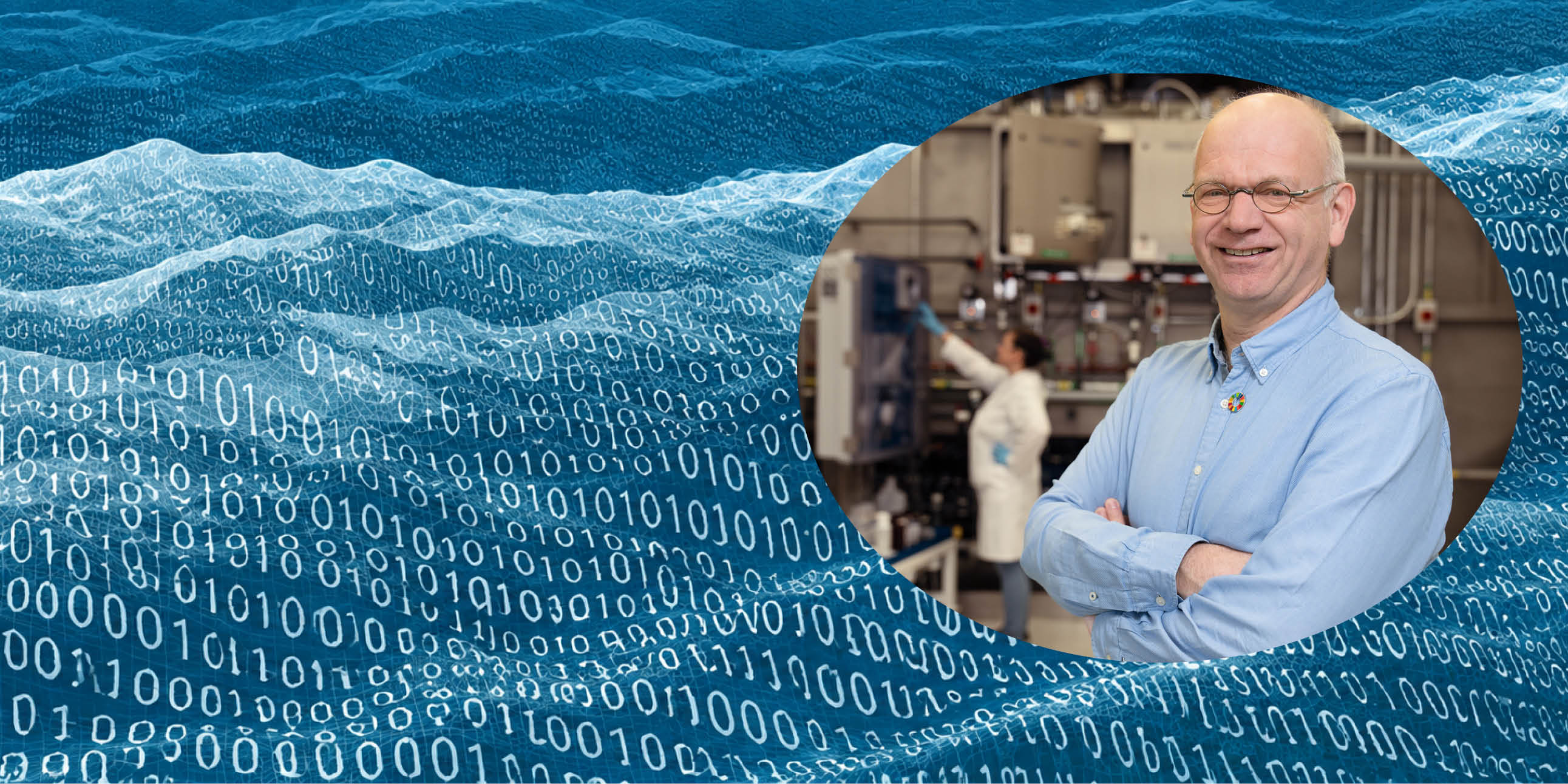
WaterCentre@KTH presents a lunch seminar with Professor Peter Vanrolleghem, Department of Water and Civil Engineeering, Université Laval, Quebec, Canada.
Time: Thu 2026-09-17 12.00 - 13.00
Location: Climate Action House, Teknikringen 43
Language: English
Participating: Peter Vanrolleghem
How can artificial intelligence help wastewater treatment plants remove nitrogen more efficiently – while reducing energy use and supporting operators in their day-to-day decisions?
In this seminar, Professor Peter Vanrolleghem will explore how machine learning and process-based models can be combined to create digital twins of wastewater treatment processes. By bringing together knowledge of the underlying biology and chemistry with data from real treatment plants, these hybrid models can predict how a plant will behave and help identify better ways of operating it.
Peter Vanrolleghem will present recent examples from full-scale wastewater treatment plants in the US, Canada and France, and discuss what it takes to move these technologies from research into real-world operation. He will also look at the challenges that remain – and what the future may hold for AI-supported and even automated control of nitrogen removal processes.”
The first 15 to arrive will get a vegetarian wrap and a soft drink!
Peter Vanrolleghem obtained degrees in Bio-engineering and a PhD in Environmental Technologies from Ghent University (Belgium). In 1997, he became a professor there in bioprocess modelling and control, working across a wide range of application areas, including food, agriculture and wastewater treatment.
In 2006, he immigrated to Quebec as the holder of the Canada Research Chair in Water Quality Modelling. He is a full professor in Université Laval’s Department of Civil and Water Engineering, where his multicultural research team, modelEAU, focuses on urban wastewater systems and tackles challenges such as nutrient removal and recovery, the fate of micropollutants and pathogens, and greenhouse gas emissions. The team develops and applies mathematical models, automated monitoring stations and process control, as well as conducting in-house pilot- and full-scale experimental work.
He is very active in the Water Environment Federation and the International Water Association. He was a Member of WEF’s Board of Trustees from 2016-2019 and a member of IWA’s Board for two terms, 2012-2016, and 2021-2024. Since 2022, he chairs IWA Publishing’s Board. In the province of Québec, he initiated the Water Management Research Center, CentrEau, and led it for its first 5 years. He was awarded the 2023 NSERC Donna Strickland Prize for conducting research with the highest Societal Impact of Natural Sciences and Engineering Research in Canada.
Register